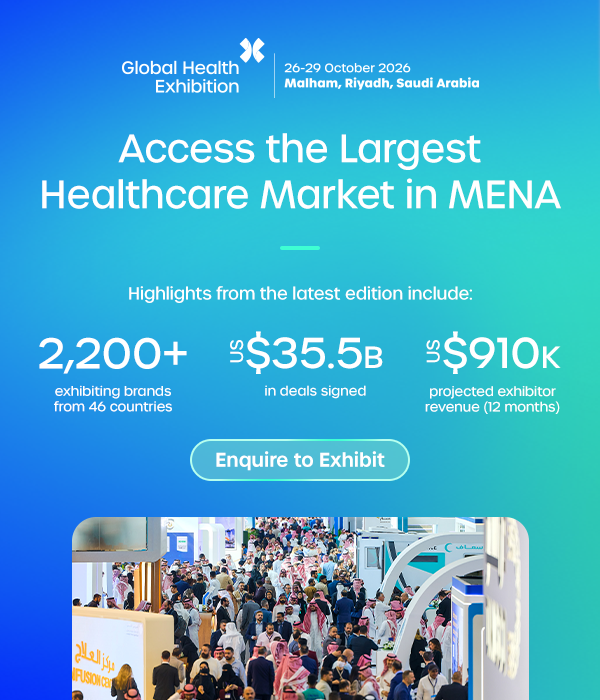

From Fragmented to Unified: How Saudi Arabia Is Digitising Its Entire Healthcare System
Saudi Arabia is undergoing a significant transformation in healthcare, driven by digital innovation and a commitment to improving patient care. As the largest healthcare system in the GCC region, serving over 35 million people across more than 20,000 healthcare facilities, Saudi Arabia faces unique challenges in ensuring seamless healthcare delivery.
Through strategic investments in technology, interoperability and patient-centred solutions, KSA is setting a new standard for digital health. At the Global Health Exhibition 2025, healthcare leaders and professionals will have the opportunity to witness the latest advancements in digital health. Central to these discussions is the Unified Health Record (UHR) - a national platform that streamlines information exchange, enhances patient safety and ensures continuity of care.
This blog explores how Saudi Arabia is leveraging technology to address healthcare challenges, the role of UHR in revolutionising patient data management and the path forward for digital health transformation. As Saudi Arabia pioneers these advancements, its approach could serve as a model for other nations seeking to enhance healthcare accessibility and efficiency through digital transformation.

Laying the Foundation for Digital Health Innovation
The digital transformation of Saudi Arabia’s healthcare sector has been built on a series of strategic innovations. Several key initiatives have paved the way for an interconnected and data-driven health system.
1. Sehhaty App – A One-Stop Healthcare PlatformSehhaty is the national health platform that serves as a single access point for patients to manage healthcare services. Initially gaining prominence during the COVID-19 pandemic, Sehhaty enabled seamless appointment scheduling, test bookings and access to health records. Today, it offers expanded services, allowing patients and residents of Saudi Arabia to interact with healthcare providers more efficiently.
2. Anat App – Empowering Healthcare Practitioners
Anat is a dedicated application designed to support healthcare professionals by providing access to essential services such as licensing, training and professional records. By streamlining administrative tasks, Anat enables practitioners to focus on patient care.
3. Raqim – A Lean Health Information System (HIS)
Raqim is a next generation HIS operating in over 2,000 primary healthcare centres across the Saudi Arabia. Designed to optimise healthcare operations, Raqim supports hospitals and clinics with data-driven decision-making and resource management.
4. Ayenati – Revolutionising Lab Data Exchange
Ayenati is an advanced eLab platform that improves the efficiency of laboratory services by facilitating real-time data exchange and logistics coordination for lab tests. It enhances diagnostic accuracy and speeds up the delivery of test results.
5. AXN – AI and Data Analytics for Smarter Healthcare
AXN is an AI-powered analytics platform that leverages vast amounts of healthcare data to generate actionable insights. By integrating AI into healthcare decision-making, AXN improves patient outcomes and enhances operational efficiency.
The Challenge: Overcoming Data Fragmentation
Key concerns included:
Disjointed Patient Records - Different healthcare providers stored patient data separately, making it difficult to access a comprehensive medical history.
Limited Data Exchange - Lack of standardisation in health information systems created barriers to seamless data sharing.
Patient Safety Risks - Incomplete or inaccessible health records posed risks to accurate diagnosis, treatment coordination, and medication management. To address these issues, Saudi Arabia embarked on an ambitious mission: the creation of a national health information exchange system - the Unified Health Record (UHR).
Introducing NPHIES (Nafis): The National Health Information Exchange
Saudi Arabia’s solution to healthcare data fragmentation is Nafis, the National Platform for Health Information Exchange Services. Inspired by the pioneering work of Ibn Nafis, the scientist who first described pulmonary circulation, Nafis is designed to connect disparate healthcare systems into a unified network.
The objectives of Nafis align with the Quadruple Aim of healthcare improvement:Enhancing Patient Experience – Ensuring patients have seamless access to their medical records.
Improving Population Health – Enabling data-driven healthcare policies and interventions.
Reducing Costs – Streamlining administrative processes to eliminate inefficiencies.
Supporting Healthcare Providers – Equipping professionals with real-time patient data for better decision-making.
Through Nafis, Saudi Arabia is transitioning from isolated health information systems to a standardised, secure and patient-centred ecosystem.
A Nationwide Commitment to Healthcare Transformation
The implementation of Nafis is a multi-phase journey. Some of the key milestones achieved so far include:
15 million patients covered under UHR – A significant step towards achieving full national coverage.
Integration with Sehhaty and Anat Apps – Allowing both patients and healthcare practitioners to access unified health records seamlessly.
Establishment of National Registries – Creating unique identifiers for patients, practitioners and healthcare facilities to ensure data integrity.
Leveraging AI for Improved Clinical Decision-Making – Integrating generative AI models to assist physicians in retrieving and interpreting patient history.
By 2025, Saudi Arabia aims to achieve 100% coverage under UHR, making it the largest nationwide health information exchange in the world.
Harnessing AI and Digital Twin Technologies for the Future
AI-Enabled Clinical Support – AI-driven insights help doctors analyse patient history, recommend treatments and improve diagnostic accuracy.
Digital Twin for Population Health – A virtual representation of healthcare systems enables policymakers to predict health trends and design proactive interventions.
Red Crescent Integration – Emergency responders now have access to real-time patient records, allowing them to provide life-saving care with greater precision.
Join Us at Global Health Exhibition 2025
Join us to:
✅ Gain insights from global healthcare experts
✅ Discover the latest health technology
✅ Network with key stakeholders in the healthcare industry
Be part of the transformation. Register now for the Global Health Exhibition 2025 edition!



Foundation Partner

Foundation Partner

Platinum Partner

Silver Partner

Silver Partner

Silver Partner

Media Partners

















.png)





























.png)