
From Platforms to Patients: Industry and Policy Shaping the Next Decade of Global Health
Reflections from #GHE25
At #GHE25, the session “From Platforms to Patients: Industry and Policy Shaping the Next Decade of Global Health” brought together leaders from MedTech, pharma, insurance, and healthcare innovation to examine a defining question for the years ahead: how can healthcare systems turn scientific progress into real, scalable patient impact?
Moderated by Sasha Qadri, the panel featured Chris Scoggins, Executive Vice President at Abbott, Roberta Marinelli, President and General Manager at Eli Lilly & Company, Dr. Omar Ishraq, Former Chairman & CEO of Medtronic, Dr. Steve Yang, Co-CEO of WuXi AppTec, and Dr. Nabat Majrashi, VP of Planning and Insight at Al Rajhi Takaful.
While the perspectives around the table spanned diagnostics, therapeutics, platforms, insurance, and system design, the conversation converged around a powerful idea: the future of healthcare will not be defined by innovation alone, but by how well we connect policy, technology, data, and delivery around the patient.
Scientific Progress Is Accelerating — but So Is the Pressure
Roberta Marinelli captured that momentum clearly, noting that science is “accelerating at an unprecedented pace.” But she was equally clear that acceleration on its own is not enough. Healthcare is entering a decade in which the scale of the challenge is also growing rapidly.
The burden of obesity is rising. Dementia is expected to increase sharply. Cancer incidence continues to grow. Diabetes remains one of the defining diseases of this century. In that context, innovation cannot stop at invention.
As Marinelli put it, “innovating and accelerating innovation isn’t enough. We have to implement it well.”
That framing set the tone for the rest of the discussion. The challenge ahead is not simply about discovering more. It is about making breakthroughs work in the real world.
Global Innovation Must Translate into Local Impact
Breakthroughs may emerge globally, but healthcare impact is shaped by local systems: regulatory pathways, reimbursement models, population needs, care delivery structures, and the strength of national partnerships. A new therapy or platform may exist, but unless it is supported by local policy, evidence, and implementation capacity, its value remains theoretical.
Marinelli stressed that “global innovation only makes sense if it generates a local impact,” and she pointed to Saudi Arabia as a strong example of what this can look like when regulators, industry, and health policy move with shared urgency. Her examples around obesity and Alzheimer’s in the Kingdom showed how local evidence can help guide future policy, translating scientific potential into economic and population-level relevance.
This local lens also shaped Dr. Steve Yang’s perspective. Innovation, he argued, may be borderless in principle, but it still needs to be tailored to the needs of specific regions. Different populations, healthcare systems, and disease burdens require different approaches. That is where connected platforms matter — not simply as technical infrastructure, but as the means to link global knowledge with local application.
Data Fragmentation Remains One of the Biggest Structural Barriers
Dr. Nabat Majrashi was direct in identifying this as one of the key national-level barriers. Healthcare systems today collect vast amounts of information, yet too often that information exists in silos. Data may sit across hospitals, payers, primary care, diagnostics, devices, and wellness platforms without being unified in ways that enable action.
That fragmentation has real consequences. It limits the effectiveness of AI. It weakens personalisation. It slows decision-making. And most importantly, it disrupts the continuity of care for patients.
Several speakers returned to this point in different ways, but the conclusion was consistent: without unified, clean, interoperable data, even the best innovation cannot deliver its full value.
The irony, as Marinelli observed, is that we live in the most connected era ever, yet healthcare still feels fundamentally disconnected. Systems continue to revolve around processes rather than people. Data is collected, but not meaningfully connected. And when that happens, patients fall through the cracks.
The Most Important Shift Is from Treatment to Prevention
This was especially visible in the discussion around Saudi Arabia’s next phase of health system development. Dr. Nabat Majrashi described a future in which the Kingdom moves further toward understanding regional population needs, building the right care networks, and linking cost to outcomes rather than activity. She pointed to a shift from treating patients after disease onset toward identifying risk earlier and investing more in prevention and wellness.
This was echoed by other speakers as well. Prevention is no longer simply a public health aspiration. It is becoming a system necessity.
Several parts of the discussion reinforced the same principle: early diagnosis is not only humane, it is economically sound. Prevention reduces avoidable burden. It helps systems move upstream. And it creates the conditions for more sustainable healthcare spending over time.
In that sense, value-based care was framed not as a reimbursement mechanism alone, but as a broader mindset shift — from measuring healthcare by how much is delivered to measuring it by how much healthier people become.
Technology Matters Most When It Changes Behaviour
Dr. Omar Ishraq made this point especially well, arguing that one of the most powerful opportunities in healthcare is behaviour change. In his view, technology can help prevent not only the escalation of disease, but in some cases the very beginning of it. When combined with sensors, alerts, monitoring, and data-driven nudges, digital health tools can create a more continuous model of care rather than one dependent on symptoms or crisis moments.
This has major implications for conditions like diabetes. Chris Scoggins described how Abbott is thinking about innovation not as a generic technology push, but as a targeted response to real patient need. In Saudi Arabia, where type 1 diabetes incidence is high and diabetic ketoacidosis remains a major concern, combining glucose and ketone monitoring in a single wearable is not just a technological advance — it is a way to intervene earlier and reduce risk in a meaningful population.
The broader point was that technology’s value lies not just in efficiency or sophistication, but in helping people act sooner, understand their health better, and avoid deterioration before it happens.
Democratising Innovation Requires Accessibility, Affordability, and Design for Real Life
Too much technology, she argued, is still built without enough consideration for the end user. Whether a solution is technically advanced matters far less if it is difficult to access, hard to use, or poorly integrated into the care journey. For innovation to scale, it has to reflect real human behaviour and real system realities.
That is particularly important in payer and provider environments, where technology cannot sit outside the operating model. It has to work across policy, reimbursement, workflows, and user adoption. Her point was a useful reminder that successful innovation is not just about building better tools. It is about building tools people can actually use.
Saudi Arabia’s Health Transformation Is Creating the Conditions for Scale
What stood out in the discussion was not only the ambition of Vision 2030, but the degree of alignment behind it. There was clear recognition that progress in the Kingdom is being supported by a combination of long-term planning, digital health investment, stronger use of data, and meaningful partnerships across sectors.
Dr. Omar Ishraq pointed to one of Saudi Arabia’s structural advantages: the ability to take a longer-term view. Many countries, he suggested, struggle to invest in programmes whose return takes time. Saudi’s policy environment and strategic continuity create more room for long-horizon health system building — especially in areas like prevention, value creation, and population health.
Chris Scoggins made a related point from Abbott’s perspective. The reason certain initiatives feel particularly promising in Saudi, he explained, is not simply because of the technology itself, but because of the strength of the partnership over time. Technology on its own does not transform healthcare. It is the combination of policy, people, and technology that creates system-level impact.
The Most Important Policy Priority May Be Integration
The answers varied in wording, but pointed in one direction: integration.
For Dr. Nabat Majrashi, this meant a unified healthcare platform that connects providers, payers, patients, and decision-makers. For Marinelli, it meant interoperability and health data transparency as a public health priority. For Chris Scoggins, it meant ensuring that patient data is not trapped in disconnected places, because without a unified view, clinicians and systems cannot truly care for the person behind the data.
This may not be the most glamorous answer, but it may be the most important one.
Healthcare can continue adding new tools, new platforms, and new datasets, but unless they are connected in a way that serves the patient journey, the system remains fragmented. Integration is what makes prevention more targeted, AI more useful, decisions more informed, and care more personalised.
In many ways, it is the real infrastructure of next-generation healthcare.
Final Reflection
There was optimism — around AI, diagnostics, drug discovery, wearables, and digital platforms. But there was also a clear recognition that the next decade of global health will not be won by innovation in isolation.
It will be won by systems that can connect innovation to implementation through:
- Translating global science into local impact.
- Turning fragmented data into coordinated care.
- Designing around outcomes, not activity.
- Shifting from treatment to prevention.
- Ensuring technology works for people, not just around them.
- Building the policy foundations that allow all of this to scale.
The next decade of healthcare will not be shaped only by what we invent, it will be shaped by how well we connect it: from platforms to patients.
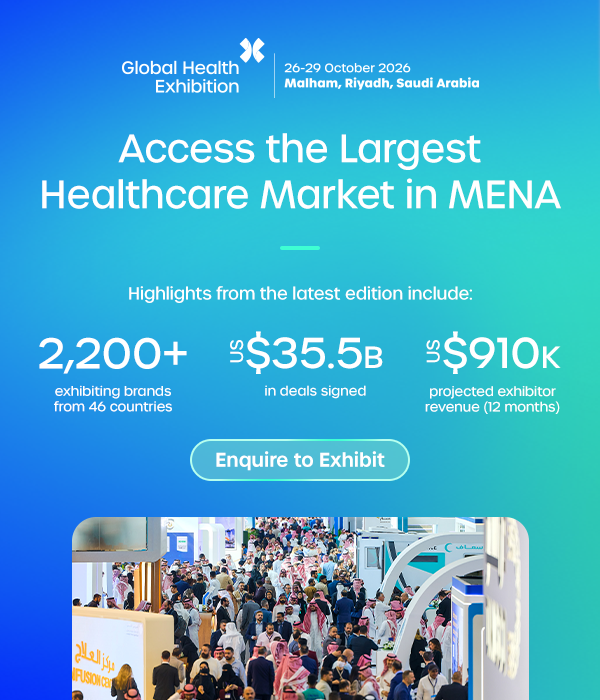
Be part of this unparalleled event and join the discussions that are shaping the future of global healthcare. Register your interest for the Global Health Exhibition 2026 today: https://globalhealthexpo.info/li-social



Foundation Partner

Foundation Partner

Platinum Partner

Silver Partner

Silver Partner

Silver Partner

Media Partners


















.png)































.png)