
Building Healthcare’s Digital Backbone: What NEOM, Lean and the UK’s HealthTech Leaders Can Teach Us
As we move toward an increasingly digitised world, healthcare is undergoing a fundamental transformation. While physical infrastructure - roads, buildings and hospitals remains critical, a new form of infrastructure is taking centre stage: digital infrastructure. These systems manage vast amounts of patient data, facilitate interoperability, and enhance decision-making through artificial intelligence (AI) and machine learning. This unseen yet essential component is driving the future of healthcare by enabling data-driven insights, improving patient outcomes and fostering collaboration between the public and private sectors.
According to Dr. Abdulrahman Alsheikh, Director of Population Health at Lean Business Services, digital infrastructure is the backbone of modern healthcare. “It’s not something we often think about”, he noted, “because we assume it just works. But the truth is, it requires careful planning, investment and strategic implementation.”

Building Saudi Arabia’s Digital Health Infrastructure
Saudi Arabia has been making significant strides in healthcare digitalisation. Lean Business Services, established in 2017, has played a pivotal role in creating registries for healthcare data, integrating siloed systems and consolidating regulatory frameworks.
One of Lean’s major contributions occurred during the COVID-19 pandemic, when it helped unify disparate healthcare applications into a single platform. This enabled seamless access to medical records, vaccination data and telehealth services—ultimately supporting public health initiatives and improving healthcare accessibility across the Kingdom.
Dr. Abdulrahman Alsheikh emphasised the importance of leveraging data to improve patient outcomes: “We can now control the quality of care and reduce disparities across different regions by having a robust digital infrastructure. The pandemic accelerated regulatory alignment and made stakeholders realise the importance of having a unified system.”
NEOM: Pioneering the Healthcare System of the Future
While Saudi Arabia is integrating digital systems into its existing healthcare framework, NEOM—a futuristic city under development—offers a unique opportunity to design a healthcare system from scratch.
Dr. Khaled Hamawi, Executive Director of Health Planning and Provision, Health System Design & Management at NEOM, explained that the city’s approach to healthcare is fundamentally different:
- Personalised and Preventative Care: NEOM’s healthcare model prioritises proactive and preventative measures over traditional reactive care.
- Data-Driven Decision Making: The system is designed to harness vast amounts of health data—including genetics, behavior and environmental factors—to create personalised care plans.
- Seamless Integration: NEOM’s digital infrastructure will allow various healthcare providers, AI algorithms and research institutions to tap into high-fidelity datasets, enabling smarter and more efficient healthcare solutions.
Dr. Khaled Hamawi noted, “We’re building digital highways—data lakes and AI-driven platforms—that will not only serve NEOM but can be exported as a model for healthcare innovation worldwide.”
Lessons from the UK: Balancing Legacy Systems and Innovation
While Saudi Arabia is building digital infrastructure with fewer legacy constraints, the UK is tackling digital transformation within an established and complex healthcare system. Suzy Ali-Hassan, International Business Director for the Association of British HealthTech Industries (ABHI), highlighted both the successes and challenges of the UK’s approach.
One of the UK’s key achievements is the CVD Prevention Programme, which leverages primary care data to identify high-risk cardiovascular patients and optimise their treatment. This initiative has demonstrated that effective use of digital tools can significantly reduce preventable heart attacks, potentially saving the NHS (National Health Service) over £100 million annually.
However, legacy systems pose significant hurdles. The UK has invested in innovation accelerators to bridge the gap between public healthcare and private-sector solutions. Suzy Ali-Hassan stressed the importance of collaboration: “The NHS alone cannot drive transformation, and industry cannot succeed without an engaged healthcare system. The key is building public-private partnerships that focus on long-term value rather than short-term transactions.”
Facilitating Market Entry for Foreign Companies
With Saudi Arabia positioning itself as a hub for healthcare innovation, foreign companies are increasingly looking to enter the market. Talal bin Abdolmohsen Al-Hogail, Head of Mergers and Acquisitions at the General Authority for Competition, explained that any company seeking to establish a joint venture or acquire a stake in Saudi healthcare must first apply for economic concentration approval.
This process ensures that competition remains fair and that market consolidation does not lead to increased costs or reduced quality of care. “We have seen a 55% increase in foreign healthcare companies entering Saudi Arabia between 2022 and 2023,” Mr. Talal Al-Hogail stated, “demonstrating the Kingdom’s attractiveness as an investment destination.”
The Role of Startups in Shaping the Future
For startups looking to contribute to Saudi Arabia’s healthcare ecosystem, NEOM and Lean Business Services offer avenues for collaboration. NEOM has established an investment fund and venture studios to support early-stage healthcare innovations, while Lean prioritises in-house development but remains open to partnerships for specialised solutions.
Dr. Abdulrahman Alsheikh explained Lean’s approach: “We aim to build sustainable, locally developed solutions that comply with regulations and are adaptable to emerging technologies like AI. Startups that align with this vision have opportunities to collaborate.”
The Future of Digital Healthcare Infrastructure
As healthcare moves toward a data-driven model, digital infrastructure will be the foundation that enables innovation, improves patient care and ensures efficiency. The panel discussion underscored three key takeaways:
- Investment in Digital Infrastructure is Essential: Countries and healthcare organisations must prioritise building robust digital systems to support future needs.
- Public-Private Partnerships Drive Progress: Collaboration between governments, healthcare providers and private companies accelerates innovation and ensures sustainable development.
- Data Governance and Regulation Must Evolve: As digital health systems expand, regulatory frameworks must balance data accessibility with privacy and security.
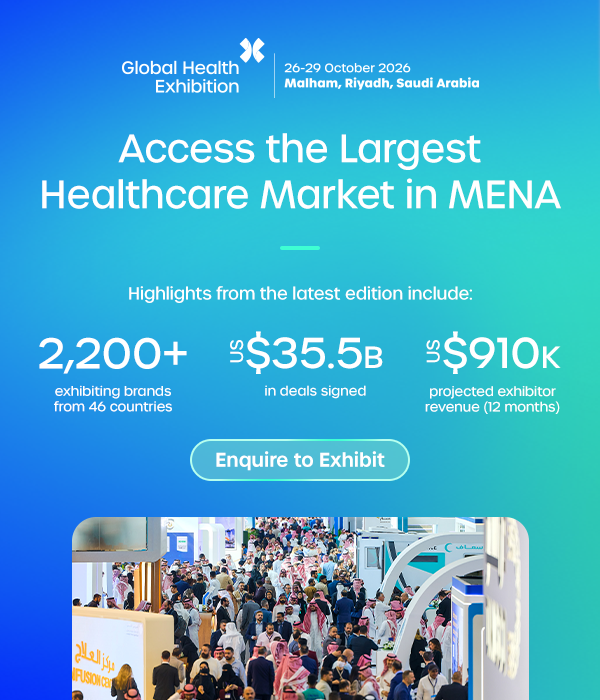
With their ambitious vision for healthcare transformation, Saudi Arabia is poised to become a global leader in digital health innovation. Register now for Global Health Exhibition 2025 to see how KSA will achieve it all and what it means for your business and the global healthcare industry.



Foundation Partner

Foundation Partner

Platinum Partner

Silver Partner

Silver Partner

Silver Partner

Media Partners


















.png)































.png)